Zeus Design System
For Jackson & Coker Locum Tenens
Built a scalable design system for a growing CRM platform, improving UI consistency, delivery speed, and cross-team alignment.
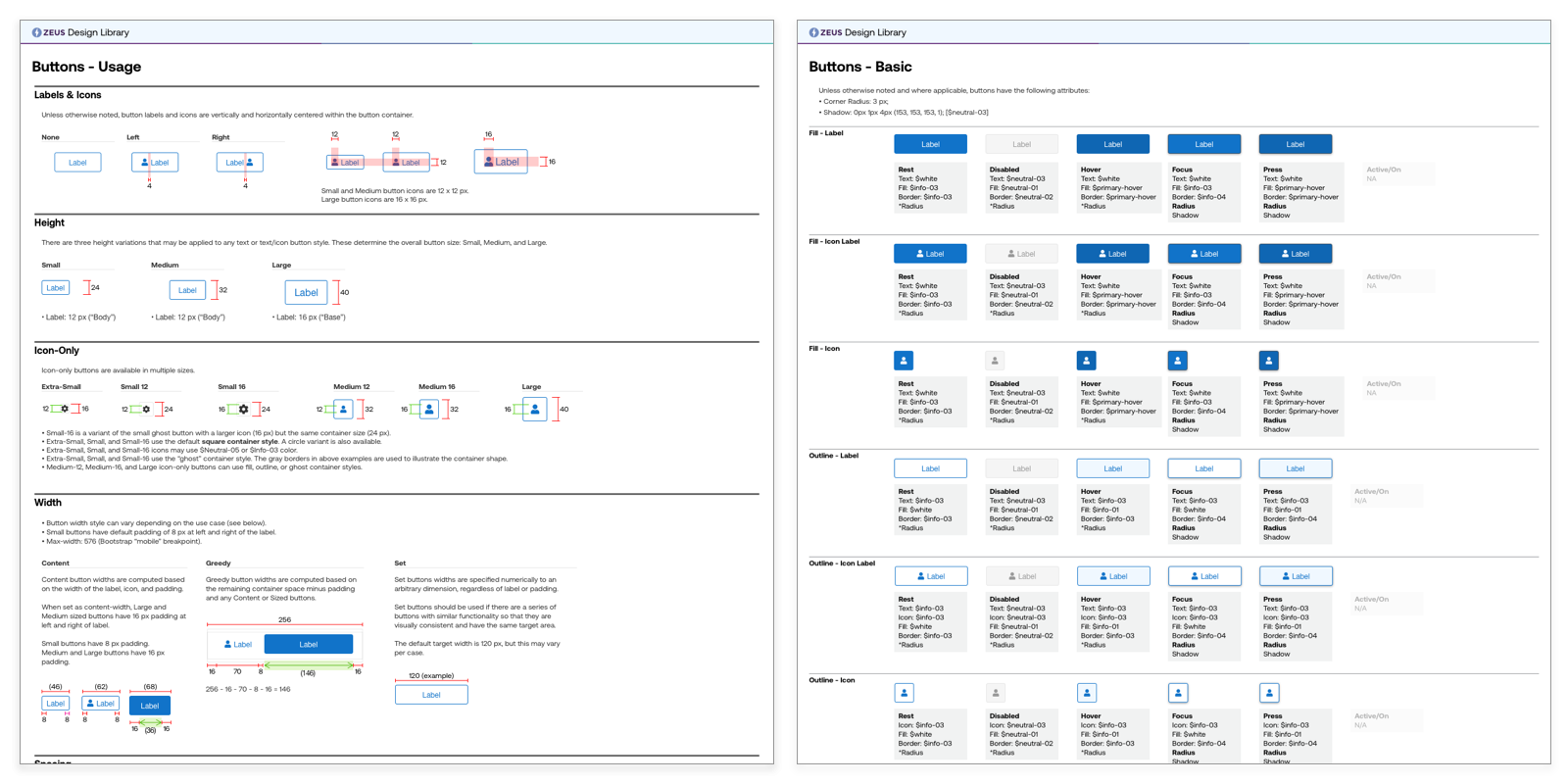
Challenge
Jackson & Coker Locum Tenens' proprietary CRM, Zeus, had helped fuel significant sales growth, but years of rapid expansion had left the interface increasingly inconsistent. The result was slower development, duplicated design decisions, and a more confusing experience for users. The Product & Technology team needed a scalable design system that could bring clarity and consistency to the platform without slowing down active feature delivery.
Approach
Through a comprehensive assessment of user needs, technical dependencies, and team workflows, UX identified key goals for the design library initiative:
- Create a single source of truth for UI patterns, components, and interaction behaviors, improving consistency across the platform while reducing cognitive load for users.
- Accelerate product delivery by empowering UX, Product, Engineering, and QA teams to independently access approved solutions and implementation guidance.
- Build a scalable foundation that supports continued product growth, evolving business needs, and future feature development.
- Establish a sustainable system that is easy to maintain and evolve without creating additional dependencies on specialized resources or teams.
Result
The Zeus Design System became a foundational resource for the Product & Technology organization. It enabled UX to deliver consistent, high-quality experiences more efficiently while providing product managers, developers, and QA teams with a shared, self-service reference for validating UI patterns, requirements, and behaviors.
As the organization evolved, the design system was successfully migrated from Sketch to Figma. The transition included a comprehensive audit and modernization of components and patterns, leveraging Figma capabilities such as variables, slots, and, ultimately, code integration through MCP Server. This evolution strengthened design-development alignment, improved maintainability, and positioned the system to scale with future product growth.